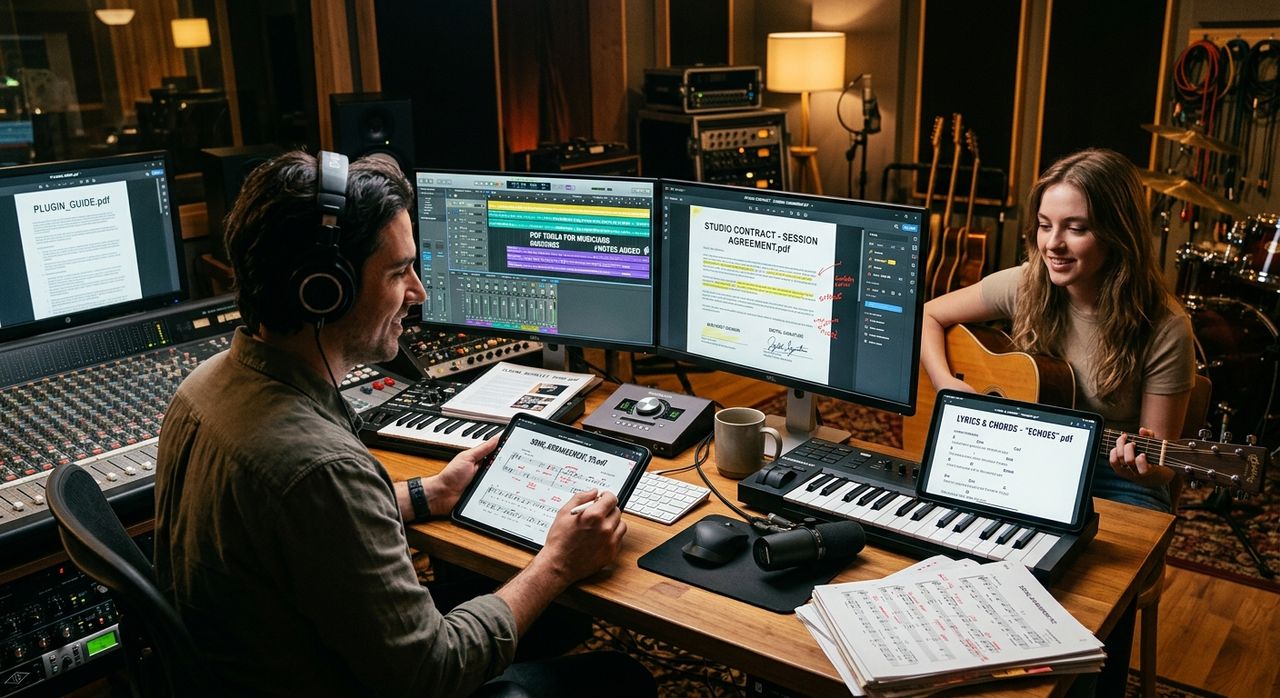
If you spend your days working with audio files, you probably did not sign up to become a document manager. But the reality of working in music, whether you are producing tracks, performing live, or licensing your work, is that paperwork follows you everywhere. Contracts land in your inbox before sessions start. Press kits need to go out before gigs get confirmed. Sample clearances pile up every time you build something from existing material. Handling documents well is not a side task. It is part of the job.
Key Points:
1. Musicians and producers handle a constant flow of PDFs including contracts, press kits, sample clearances, and licensing agreements.
2. Combining multiple documents into a single attachment before sending to labels or venues saves time and looks more professional.
3. The right PDF tools help you stay organized, protect important documents, and communicate more clearly with industry contacts.
The Paper Trail Behind Every Track
Most people see the finished song. They do not see what it took to get there. Before a track gets released, a surprising number of documents change hands. There is the recording contract or distribution agreement. There is the publishing deal if your songs are being placed with other artists. There is the sync licensing paperwork if your music is being placed in a film, TV show, or ad. And if you sampled anything, even a two-second drum hit, you are looking at sample clearance documentation on top of everything else.
Music licensing is a complex area of intellectual property law, and every layer of it generates paper. Or more accurately, it generates PDFs.
Live performers deal with a parallel stack of documents. Venue contracts, technical riders, hospitality riders, and press materials all need to be organized, sent, and sometimes signed before a single soundcheck happens. If you are working with a booking agent or manager, those documents multiply further.
The point is this: being organized with your files, not just your audio files but your document files, is a professional skill that pays off constantly.
Why PDFs Became the Industry Standard
PDFs became the go-to format for professional documents for a few good reasons. They preserve formatting across every device and operating system. A contract that looks clean on your Mac will look exactly the same on a Windows laptop at a label office. Fonts, spacing, and layout stay locked in place. That matters when you are sending agreements that need to look professional and legible.
PDFs are also harder to accidentally edit. When you send a Word document, there is always a small risk the recipient opens it, changes something without noticing, and sends it back with unintended alterations. A PDF signals that the document is final. It is a record, not a draft.
Most signing tools and legal platforms also work natively with PDFs, which makes them practical for anything requiring a signature. In short, the format works for everyone in the chain, from independent producers to major label A&R teams.
Bundling Documents Like a Professional
Here is where a lot of musicians lose time without realizing it. You have finished putting together a press kit. You also have a venue contract ready to go, and you have already written up your technical rider. You are emailing a venue or a booking contact, and you end up attaching three separate files. The recipient now has to open three things, track three documents, and potentially confuse which version of which file belongs to which conversation.
The cleaner move is to combine everything into one polished attachment before you send it. A single PDF that contains your release contract, your rider, and your press kit reads as far more organized than a multi-file email. It tells the person on the other end that you have your act together, which matters more than people admit in this industry.
That is exactly where a tool that lets you merge PDF files becomes genuinely useful. You work on each document separately, get them exactly how you want them, and then combine them into one cohesive file for the final send. No need to rebuild the layout. No reformatting. Just a clean, professional package.
This applies to any situation where you are bundling related materials:
- A grant or funding application that requires your bio, a project description, and budget documents
- A sync licensing pitch that includes your track listing, licensing terms, and composer notes
- A booking inquiry where you want your EPK, your set length options, and your technical needs in one place
- A record label submission that combines your demo notes, contact sheet, and rights information
The practical payoff is real. Fewer follow-up emails asking for files. Less confusion about which document is which. A sharper first impression.
What to Look for in a PDF Tool
Not all PDF tools do the same things, and your needs as a musician or producer are specific. You are probably not running a law firm or an accounting department. You need tools that are fast, accessible without a steep learning curve, and capable of handling the few key tasks that actually come up in your workflow.
The most useful PDF capabilities for creative professionals tend to be:
- Merging multiple documents into one file
- Compressing a file that has gotten too large to send by email
- Converting a document from another format into PDF
- Adding a signature or annotation without printing anything
- Protecting a file with a password when it contains sensitive information like rates or contract terms
You do not need a full enterprise suite to handle these things. A focused browser-based tool often gets the job done faster than installing desktop software you will rarely use.
Protecting Your Work With the Right Documentation
One underrated reason to get comfortable with PDF tools is documentation. The music industry runs on relationships, and relationships can go wrong. Having clean, dated, properly formatted records of every agreement protects you when things get complicated.
This means keeping organized copies of every contract you sign or send. It means storing licensing agreements in a way that lets you find them months or years later when a question comes up about rights. And it means being able to produce documentation fast if a dispute arises, whether it is about credit, royalties, or usage rights.
PDF tools that let you organize, rename, and compress your files make this kind of documentation much easier to maintain over time. A folder of well-named PDFs from the past three years of your career is worth more than most producers realize until the moment they need it.
Sending Your EPK the Right Way
Your electronic press kit is often the first thing a venue, festival, or publication sees. It needs to look good, load fast, and contain the right information. Many producers treat their EPK as a living document, updating it with new press quotes, streaming stats, or recent show photos. That ongoing editing process is actually easier to manage when you keep each section as its own working file and merge them into the final EPK version before sending.
That workflow, where you edit components separately and combine them at the end, also makes it easier to create customized versions for different recipients. A version for a venue might lead with your technical rider and set times. A version for a music blog might lead with your bio and press quotes. A version for a sync agency might prioritize your track catalog and licensing terms. Building each from modular document pieces keeps the whole thing flexible.
The Documents That Define a Career
Audio producers and musicians put enormous energy into their craft. The sounds, the arrangements, the performances, all of that work represents real creative labor. The documents surrounding that work are what determine how it gets compensated, credited, and used in the world.
Getting comfortable with PDF tools is not about adding complexity to your workflow. It is about making sure the business side of your creative life is as tight as the music itself. The right tools make that side of things faster, cleaner, and less stressful, which leaves more mental space for the work that actually matters.